Bridging CRM and Billing: Automating Contract-to-Cash
Discover how automating contract-to-cash workflows bridges the CRM and billing divide, accelerates cash collection, and eliminates billing errors in SaaS.
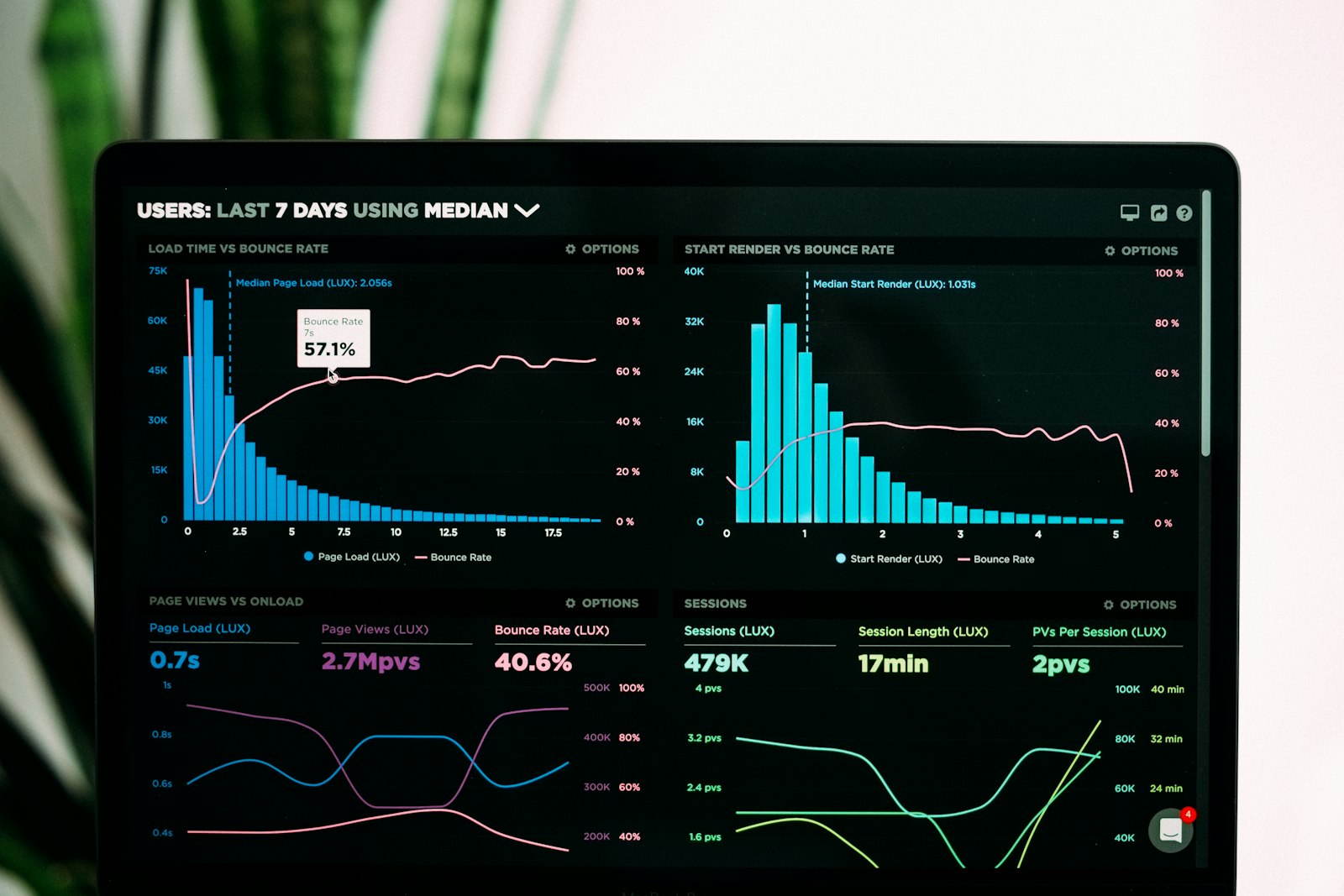
For modern B2B SaaS and product-led growth (PLG) enterprises, closing a deal should trigger a seamless operational cascade: instant provisioning, precise billing schedules, metered usage tracking, and frictionless revenue recognition. Yet, inside high-growth revenue organizations, the moment an Account Executive flips an opportunity to "Closed-Won" is often where chaos begins.
Sales reps celebrate in Slack while finance teams inherit an operational nightmare. Sales orders exist as messy line items inside Salesforce or HubSpot; complex ramp deals and custom discounting sit buried inside PDF order forms; and the billing engine—whether Stripe Billing, Chargebee, Maxio, or NetSuite—remains completely blind to the contract specifics until someone manually copies and pastes data across tabs.
This operational chasm is the contract-to-cash (C2C) gap. In hybrid PLG and enterprise motions, where consumption-based pricing models mix with upfront platform minimums and professional services, manual contract-to-cash workflows bleed margins, delay cash collections, and degrade buyer trust. In 2026, leading revenue operations teams are replacing duct-taped Zapier zaps and error-prone human handoffs with autonomous, AI-driven workflow engines. Here is your definitive blueprint for automating contract-to-cash workflows from pipeline to ledger.
The Anatomy of the Contract-to-Cash Divide
Contract-to-cash encapsulates every operational stage from the final contract signature to the cash hitting your corporate bank account and revenue being amortized under ASC 606 standards. While straightforward on paper, the interface between customer relationship management (CRM) systems and enterprise billing engines represents one of the most fragile architectures in tech operations.
Why PLG and Hybrid SaaS Break Traditional Billing
In classical top-down software sales, billing was predictable: one customer purchased ten annual seats on a standard net-30 invoice. Today’s modern hybrid models combine self-serve product telemetry with custom enterprise commitments. Sales teams layer on:
- Usage-based overages: Base platform fees billed annually, paired with monthly metered compute or API calls.
- Contractual ramps: Discounted tiers scaling up over quarters (e.g., $40k Q1, $80k Q2, $120k Q3).
- True-ups and milestone drawdowns: Prepaid credits consumed dynamically based on end-user seat activation.
- Co-terming and amendments: Add-ons signed halfway through a multi-year master services agreement (MSA).
CRMs excel at relationship management, pipeline probability, and opportunity tracking; they are fundamentally unsuited to serve as billing ledgers. Billing engines, conversely, require pristine, programmatic schemas. When systems don't converse via automated orchestration, RevOps and FinOps teams absorb the friction as manual administrative overhead.
The Operational Cost: Research indicates that SaaS companies relying on manual quote-to-bill handoffs experience an average Days Sales Outstanding (DSO) increase of 14 to 22 days, coupled with a 2.3% recurring leakage in unbilled usage and miscalculated discounts.
The 4 Points of Failure in Unautomated Billing Handoffs
To design an autonomous workflow, you must isolate exactly where manual workflows fracture. In analyzing hundreds of growth-stage pipelines, the friction consistently concentrates across four systemic bottlenecks:
1. Dirty CRM Data and CPQ Disconnects
Sales reps are incentivized to close deals, not execute precise data hygiene. Configure, Price, Quote (CPQ) software helps standardize product SKUs, but custom concessions agreed to via email or side letters frequently fail to map cleanly into billing catalog fields. When an opportunity closes with unstructured line-item discounts or irregular invoice schedules, the downstream billing tool rejects the payload.
2. The PDF "Swivel-Chair" Reconciliation
Despite the ubiquity of digital signatures (DocuSign, PandaDoc), the signed agreement often terminates as a static, unparsed PDF attached to the CRM record. A billing operations analyst must manually read the agreement, verify currency terms, tax exemptions, and payment thresholds, and transcribe them into the ERP or subscription engine. This "swivel-chair" process is slow, expensive, and intrinsically prone to typographical error.
3. Usage Telemetry Desynchronization
For PLG companies, the product itself generates the billing triggers. If your data warehouse (Snowflake, BigQuery) transmits consumption events directly to the billing tool without bidirectional sync to the CRM, account executives have zero visibility into customer consumption runway. They cannot anticipate renewals, spot expansion triggers, or proactively manage customers nearing tier limits.
4. ASC 606 Revenue Recognition Latency
Finance cannot close monthly books until billing matches contractual delivery. When contract amendments, service delivery dates, and subscription renewals are reconciled manually, the month-end close stretches past 10–15 business days. This delay cascades into delayed strategic decisions and board reporting blind spots.
The Blueprint: An Autonomous Contract-to-Cash Workflow Architecture
Bridging the CRM-to-billing divide requires moving beyond simplistic point-to-point webhooks. Modern workflow automation leverages intelligent orchestration that validates, transforms, schedules, and reconciles data across platforms autonomously.
Whether evaluating agentic automation platforms or building dedicated internal orchestration pipelines, this four-layer architectural framework powers modern C2C automation:
Layer 1: The Contract Ingestion & Parsing Engine
The moment an agreement completes electronic signing, an event webhook captures the executed document. Rather than relying solely on structured CRM fields, multimodal AI agents cross-examine the signed contract text against the CRM Opportunity line items to catch discrepancies:
- Extracts payment terms (e.g., Net 30, Net 60, split invoicing).
- Identifies custom billing milestones and performance obligations.
- Flags discrepancies between the signed agreement and the CRM quote stage before downstream sync occurs.
Layer 2: Schema Normalization & Validation Broker
CRMs and billing tools speak different dialects. A CRM views an opportunity as an account-level asset; a billing engine treats it as a customer entity tied to specific price IDs, billing frequencies, tax codes, and currency schedules. The validation broker:
- Maps CRM SKU objects to native Billing System Product Catalog IDs.
- Verifies billing contact details, automated Tax IDs (e.g., VAT, GST), and purchase order (PO) numbers.
- Applies custom business logic: if payment method is Credit Card, route to Stripe Customer Portal; if ACH/Wire, create an automated invoicing schedule in NetSuite.
Layer 3: Provisioning and Billing Trigger Execution
Once validated, the orchestration engine executes concurrent actions without human latency:
- Customer Creation: Generates or updates the customer record in the billing engine with linked CRM identifiers (e.g.,
crm_account_id). - Subscription Initialization: Instantiates base platform fees and aligns billing start dates to actual provisioning or contract effective dates.
- Usage Meter Hook: Connects customer accounts to real-time consumption trackers to bill overages accurately at the end of each billing cycle.
Layer 4: Bi-Directional State Synchronization
The workflow does not stop at invoice generation. The automated loop feeds critical financial statuses back into the CRM so customer-facing teams possess actionable intelligence:
- Invoice creation events write paid/outstanding balances directly to the CRM account view.
- Failed payment webhooks trigger automated dunning sequences while alerting the dedicated Customer Success Manager in Slack.
- Consumption milestones notify Account Executives when an account consumes 80% of prepaid allowances, fueling upsell pipelines.
Step-by-Step Implementation: Building Your Automated C2C Pipeline
Transitioning from manual invoicing to end-to-end contract-to-cash automation requires a phased, risk-mitigated approach. Here is the operational roadmap engineering and RevOps leaders use to deploy automated billing workflows:
Phase 1: Canonical Data Dictionary Alignment (Weeks 1–2)
Standardize your nomenclature across sales and finance. You cannot automate what you cannot define. Document exact definitions for:
- Contract Effective Date vs. Billing Start Date: Does billing initiate on signature, system provisioning, or customer go-live?
- SKU Consistency: Ensure every CRM product maps 1:1 to a corresponding price ID inside your billing engine. Eliminate free-text quote modifications.
- Required Billing Fields: Enforce mandatory validation rules in the CRM before an opportunity can reach the "Closed-Won" stage (e.g., Billing Entity, Contact Email, Payment Terms, Tax ID).
Phase 2: Event-Driven Trigger & Validation Pipeline (Weeks 3–4)
Configure event listeners on your e-signature tool or CRM opportunity status. Implement an intermediate orchestration agent that evaluates readiness before writing to your billing production environment:
- Trigger: Opportunity updated to "Closed-Won".
- Condition: Order Form signed = True, Billing Contact exists, Tax ID validated.
- Action: Publish payload to the validation pipeline. If any field fails validation, route the record immediately to a RevOps triage queue with an exact error breakdown.
Phase 3: Automated Subscription & Invoice Instantiation (Weeks 5–6)
Connect your automation orchestrator to your billing engine's REST APIs. Create idempotent payloads to prevent accidental double-billing in the event of network retries. For advanced multi-product or ramp structures, employ agentic workflows that break single contracts into ordered sequential subscriptions programmatically.
Phase 4: Feedback Loops & Exception Handling (Weeks 7–8)
Construct automated fallbacks. When edge cases arise—such as an international tax validation failure or custom banking requirement—the workflow should not silently terminate. Implement automated alerting via Slack or Microsoft Teams that routes the specific contract object to the appropriate RevOps specialist with pre-filled remediation links.
How AI Agents Elevate Contract-to-Cash Automation in 2026
Traditional iPaaS tools (Informatica, Zapier, MuleSoft) struggle with the messy ambiguity of commercial contracts. Rigid if-then rule engines fail whenever sales reps insert non-standard commercial riders, irregular payment schedules, or multi-subsidiary billing configurations.
Modern agentic workflows eliminate this rigidity. By leveraging context-aware AI agents designed for revenue operations, systems can:
- Autonomously Reconcile Master Service Agreements: Parse redlines and customized legal language to determine whether custom SLA credits or non-standard renewal clauses impact billing mechanics.
- Execute Proactive Dispute Prevention: Cross-check contract terms against historical customer disputes to surface mismatches (e.g., PO requirements missing from enterprise customers that reject non-PO invoices) prior to invoice dispatch.
- Dynamically Update Consumption Thresholds: Continuously monitor real-time usage streams and autonomously generate mid-term billing true-ups and amendment proposals as accounts expand.
To explore how agentic frameworks systematically streamline complex enterprise sales pipelines, review our transparent platform pricing and workflow integration architecture.
Frequently Asked Questions (FAQ)
What is the difference between Quote-to-Cash and Contract-to-Cash?
Quote-to-Cash (QTC) encompasses the entire sales cycle starting from initial product configuration, pricing, and proposal quoting through to payment. Contract-to-Cash (C2C) focuses specifically on the downstream half of that lifecycle: beginning the moment an agreement is executed and carrying through invoicing, collection, dunning, and revenue recognition.
Can we automate C2C workflows if we still use custom order forms and bespoke enterprise terms?
Yes. In modern 2026 workflows, optical character recognition and multimodal AI agents parse unstructured text and customized addenda directly from PDFs. The agent extracts structured data—such as custom payment schedules, non-standard billing milestones, or ramp pricing—and maps it cleanly into billing engine parameters, eliminating manual transcription even for bespoke contracts.
How does automated contract-to-cash impact ASC 606 compliance?
Automating the C2C workflow directly strengthens compliance with ASC 606 and IFRS 15. By linking signed contractual milestones and delivery events programmatically to revenue recognition engines, audit trails become immutable. Every revenue allocation matches the exact performance obligation defined in the contract without relying on retrospective spreadsheet modeling.
What core platforms are typically integrated in a modern C2C workflow?
A standard high-performance C2C integration involves four primary nodes: the CRM/CPQ system (Salesforce, HubSpot), the e-signature/contract repository (DocuSign, Ironclad), the billing/subscription platform (Stripe, Chargebee, Maxio), and the general ledger/ERP (NetSuite, Sage Intacct, QuickBooks).
Conclusion: Turn Your Cash Flow into a Competitive Advantage
In product-led growth and enterprise SaaS, your operational velocity dictates your unit economics. Relying on manual handoffs between CRM systems and billing engines introduces unnecessary revenue leakage, inflates DSO, burns out finance teams, and degrades the customer onboarding experience from day one.
By automating the contract-to-cash pipeline, forward-thinking operations teams transform billing from a back-office friction point into a streamlined, autonomous engine. With clean data handoffs, instant subscription instantiation, and real-time bi-directional synchronization, you ensure every closed deal converts into recognized revenue—instantly and accurately.
📊 Agentic AI Impact Overview
Key metrics when implementing agentic AI workflows in Workflow Automation
35-60%
Efficiency Gain
Up to 85%
Error Reduction
3-9 mo
ROI Timeline
$25K-$250K/yr
Cost Savings
Implementation Roadmap